12 Apr 2026
Virginia Governor Spanberger Vetoes Key Gambling Bills: Skill Games and Fairfax Casino Push Hits Roadblock

The Vetoes That Shook Virginia's Gambling Landscape
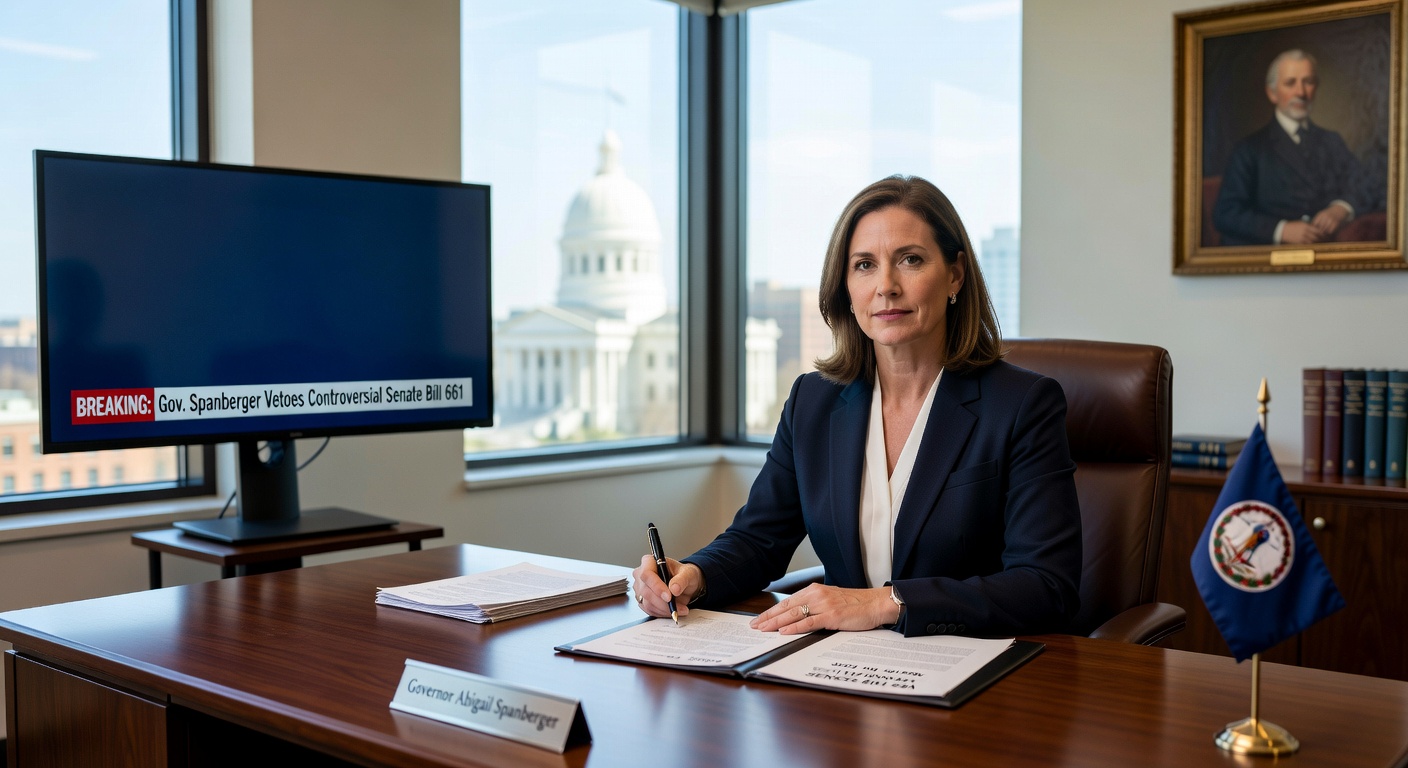
Virginia Governor Abigail Spanberger delivered a firm no to two major gambling expansion bills last week, vetoing Senate Bill 661 on Friday, April 10, 2026, and Senate Bill 756 the day before on Thursday, April 9; these moves came amid heated debates over how the state handles its growing gambling sector, which already includes five commercial casinos and a robust lottery system. SB 661 aimed to legalize up to 25,000 skill games machines under the regulation of the Virginia Lottery Board, while SB 756 sought to greenlight a new casino resort in Fairfax County without requiring local government support or a public referendum, sparking immediate backlash from those watching the legislative process closely.
Observers note that these vetoes mark a pivotal moment, especially since lawmakers now eye the General Assembly's reconvening on April 22, when override attempts could breathe new life into the proposals; that's where the rubber meets the road for supporters hoping to muster the two-thirds majority needed in both chambers to push past the governor's objections. And while the bills targeted different facets of gambling—one focused on ubiquitous skill games popping up in gas stations and bars, the other on a high-profile resort project—the governor tied them together under a single banner of regulatory caution.
Breaking Down Senate Bill 661: The Skill Games Bid
Skill games, those electronic machines blending elements of chance and player input often found in convenience stores, truck stops, and bars, have operated in a legal gray area across Virginia for years; SB 661 stepped in to clarify that by proposing legalization of up to 25,000 such devices, all overseen by the Virginia Lottery, which already manages the state's lottery and sports betting operations. Proponents argued this setup would generate significant tax revenue—potentially hundreds of millions annually—while curbing the underground market where these machines evade taxes and oversight, but critics, including the governor, saw risks in handing control to an agency already stretched thin.
What's interesting here is how the bill outlined specific regulations: machines would pay out prizes up to $5,000, with a 15% tax on gross revenues directed toward education funding, and operators required to obtain licenses costing $1,000 per machine plus fees; yet despite these details, the measure faced opposition from casino operators wary of competition and from lawmakers concerned about addiction proliferation in everyday retail spots. Take one case from neighboring states like Pennsylvania, where similar legalization led to rapid proliferation—over 25,000 machines statewide—prompting tighter controls later on; Virginia lawmakers drew from such examples, but the veto underscores that the path forward demands more than piecemeal fixes.
Senate Bill 756: Fairfax County's Controversial Casino Dream
Shifting gears to SB 756, this bill zeroed in on a proposed casino resort in Fairfax County, one of Virginia's wealthiest and most populous areas, without mandating buy-in from local officials or putting the question to voters via referendum; the project, backed by developers eyeing a $2.5 billion investment, promised thousands of jobs, hotel rooms, and entertainment venues, positioning it as an economic boon amid Northern Virginia's booming development scene. But here's the thing: Fairfax leaders vocally opposed it, citing traffic nightmares, community disruption, and a preference for zoning control staying local, which made the bill's no-referendum clause a flashpoint from the start.
Data from existing Virginia casinos, like those in Danville and Portsmouth, reveal annual revenues topping $500 million combined since opening in 2023, fueling hopes for Fairfax's slice of the pie; nonetheless, the governor highlighted the absence of local backing as a core flaw, aligning with patterns where referendums have approved four of the state's five casinos since voters legalized commercial gaming in 2020. People who've tracked these projects know that bypassing public input doesn't just ruffle feathers—it risks long-term viability, as seen in other jurisdictions where forced developments faced lawsuits and delays.
Governor Spanberger's Stated Reasons: A Call for Unity in Regulation
In her veto messages, Governor Spanberger laid out clear concerns spanning both bills: fragmented oversight that could breed confusion among regulators, heightened risks of illicit activity like money laundering through loosely monitored machines, inadequate consumer protections for vulnerable players, and disproportionate burdens on low-income communities where skill games often cluster. She advocated instead for a centralized regulatory authority overseeing all forms of gambling in Virginia—from lotteries and sports betting to casinos and potential skill games—emphasizing that patchwork laws invite exploitation while diluting the state's control.
According to coverage from Gambling Insider, the governor stressed these points in letters to legislative leaders, noting how current divisions between the Lottery Board, Virginia Racing Commission, and casino regulators create gaps; experts who've studied gambling expansion observe that unified frameworks, like those in New Jersey or Nevada, correlate with lower problem gambling rates—down 15-20% in states with single oversight bodies per recent bill tracking data analyses. Turns out, her stance echoes broader trends, as Virginia's gambling revenue hit $4.1 billion in fiscal 2025, yet calls for consolidation have grown louder amid rising addiction helpline calls, up 25% year-over-year.
The Path to Overrides: What's Next in the General Assembly
With the veto pen dry, attention turns to April 22 when the General Assembly reconvenes for its veto session; overriding requires 67 votes in the House of Delegates—where Republicans hold a slim majority—and 27 in the Senate, a tall order given party-line splits on gambling issues. Supporters of SB 661, including truck stop owners and small business advocates, point to lost revenue estimates—$200 million in taxes forgone yearly—while casino resort backers in Fairfax rally developers promising union jobs and tourism spikes; yet opponents, from faith groups to problem gambling nonprofits, flood inboxes with data showing skill games' 30-40% house edge mirroring slots, fueling concerns over disguised addiction vectors.
And so the drama unfolds: past sessions saw overrides fail on similar measures, like 2024's skill games push that crumbled 55-40 in the House, but shifting alliances—Democrats in swing districts eyeing tax dollars—could tip scales this time. Those who've followed Virginia's gambling arc since the 2020 referendum know it's not rocket science; economic pressures from budget shortfalls, projected at $2 billion for 2027, make overrides tempting, although the governor's centralized authority pitch gains traction among moderates wary of sprawl.
Context: Virginia's Evolving Gambling Scene
Virginia's gambling journey accelerated post-2020 when voters approved casinos in five cities—Bristol, Danville, Norfolk, Portsmouth, and Richmond—though Richmond's project stalled after two referendum defeats; today, four casinos operate, generating $1.2 billion in gross gaming revenue through mid-2025, with sports betting adding $800 million via apps like DraftKings and FanDuel under Lottery oversight. Skill games, banned in 2020 but resilient via court challenges, number around 30,000 illegally per state police raids, underscoring the veto's urgency; Fairfax, meanwhile, sits outside the casino beltway, its median income over $130,000 drawing developer eyes yet clashing with suburban ethos.
It's noteworthy that these vetoes arrive as national trends show 38 states with commercial casinos and 30 with sports betting, yet Virginia's deliberate pace—focusing on revenue sharing (27% local cut)—sets it apart; researchers tracking the sector found that states with fragmented rules report 10-15% higher illicit gambling incidents, validating the governor's fragmented oversight critique. One study from the University of Virginia highlighted how low-income zip codes host 60% of skill game locations statewide, aligning with her equity concerns.
Conclusion: Eyes on April 22 and Beyond
As Virginia lawmakers gear up for the April 22 showdown, the fate of skill games and the Fairfax casino hangs in balance, with Governor Spanberger's vetoes forcing a reckoning on how the commonwealth regulates its booming $4 billion gambling industry; whether overrides succeed or spark compromise toward a unified regulator remains the big question, but patterns from past sessions suggest tough sledding ahead. Observers keep watch, knowing that whatever unfolds, Virginia's approach—balancing revenue, protection, and locality—shapes not just these bills, but the state's gambling blueprint for years to come.