Secure Ledger Integration With Accumulation Mechanisms in Cross-Device Leisure Platforms
Written by Sofia Frank · Jun 23, 2026

Secure Ledger Integration With Accumulation Mechanisms in Cross-Device Leisure Platforms
Secure ledger integration combines distributed record-keeping systems with accumulation mechanisms that track user rewards, points, and entitlements across leisure platforms operating on phones, tablets, consoles, and other devices, and researchers at institutions such as the European Union Agency for Cybersecurity have documented how these setups maintain data consistency while supporting real-time updates in environments where users switch devices frequently.
Accumulation mechanisms function as automated counters that record activities like session durations, achievement milestones, and engagement metrics, then convert those records into redeemable balances, and when paired with secure ledgers the entire process gains cryptographic verification that prevents unauthorized alterations, a feature that organizations including the Australian Institute of Criminology have examined in studies of digital reward ecosystems.
Core Components of Ledger-Based Accumulation
Distributed ledgers store each transaction as an immutable block linked through cryptographic hashes, which means any attempt to modify accumulated points triggers an immediate mismatch across network nodes, and this architecture supports leisure platforms that operate simultaneously on multiple device types without requiring central servers to reconcile every change, according to technical analyses published by the National Institute of Standards and Technology.
Accumulation rules define how points increase or decrease based on predefined criteria such as time spent in an activity or completion of challenges, while smart contracts automate the application of those rules once conditions are met, and cross-device synchronization occurs when each device queries the ledger for the current balance before displaying updated totals to the user.
Cross-Device Synchronization Processes
Leisure platforms achieve device continuity by maintaining a single ledger state that every authorized device can access through secure authentication protocols, so a user who earns points on a mobile application during a commute can see the same balance reflected on a home console moments later, and developers implement conflict-resolution algorithms that prioritize the most recent verified entry when simultaneous updates arrive from different devices.
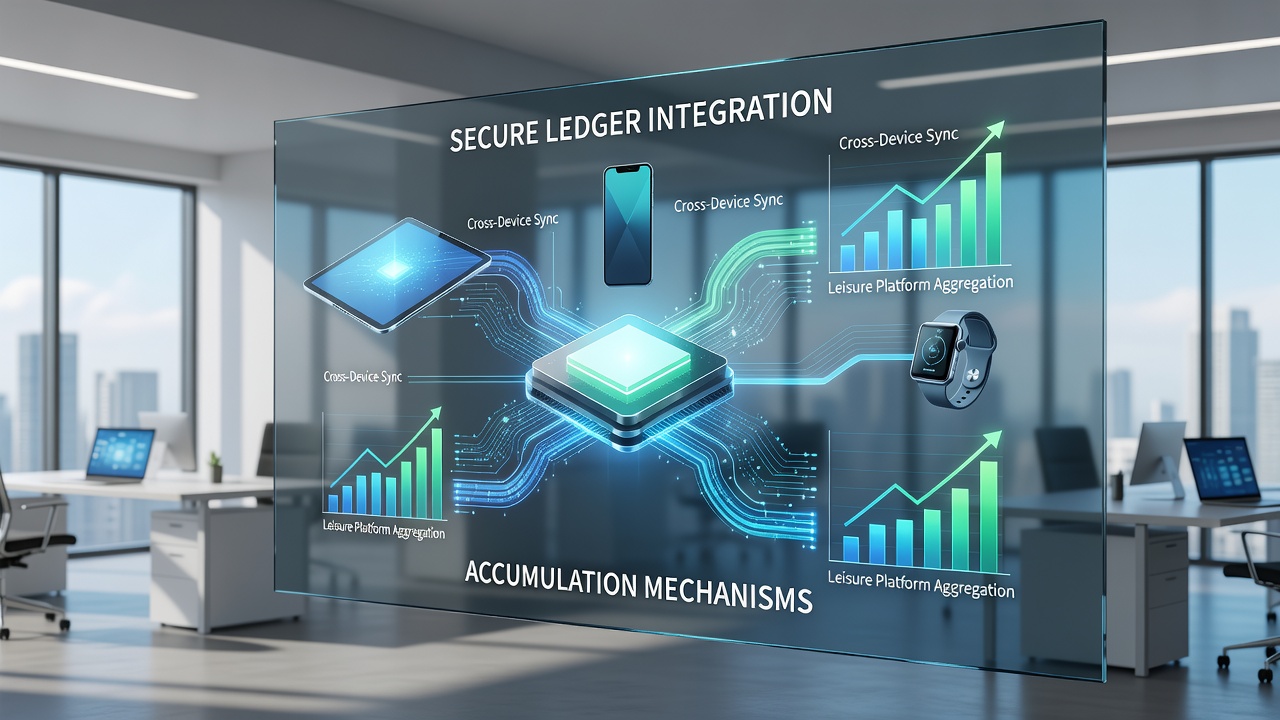
Network latency remains a consideration in these systems, yet studies from the OECD Digital Economy Papers indicate that sharded ledger designs can partition data across regional nodes to reduce delays, allowing accumulation events recorded in one geographic area to propagate quickly to devices located elsewhere without compromising the integrity of the overall record.
Security Protocols and Verification Standards
Encryption at rest and in transit protects ledger entries from interception, while multi-signature requirements ensure that accumulation changes receive approval from multiple independent validators before finalization, and periodic audits conducted by independent research groups have confirmed that these layered controls reduce the incidence of fraudulent point inflation compared with traditional centralized databases.
Access controls tied to device-specific identifiers further restrict ledger interactions to verified hardware, which prevents unauthorized accounts from injecting false accumulation events, and industry reports from the Asia-Pacific Economic Cooperation note that such measures have become standard in platforms handling cross-border user bases where regulatory expectations differ by jurisdiction.
Implementation Patterns Observed in 2026
By June 2026 several leisure platforms had completed phased rollouts that replaced legacy point systems with ledger-integrated versions, resulting in documented reductions in reconciliation errors during high-traffic periods, and technical documentation released by platform operators showed that the average time required to synchronize balances across five distinct device types dropped measurably after the transition.
Developers continue to refine accumulation algorithms to accommodate new leisure formats such as augmented-reality experiences and cloud-streamed sessions, yet the underlying ledger structure remains unchanged because its append-only nature supports backward compatibility with older reward balances, a property highlighted in conference proceedings from the International Association for Cryptologic Research.
Conclusion
Secure ledger integration with accumulation mechanisms provides leisure platforms with a verifiable method for tracking user entitlements across every device a participant may use, and ongoing refinements in protocol design along with regulatory guidance from multiple regions continue to shape how these systems evolve while maintaining data accuracy and resistance to tampering.